


ian
21,
2026
This guide is for end users, architects/designers, contractors, and building managers who need to choose a fire-rated door and want to quickly ...
ian
21,
2026
This guide is for end users, architects/designers, contractors, and building managers who need to choose a fire-rated door and want to quickly ...
aug
12,
2025
Metal fabrication projects often start with a critical question: What material should I use? Steel, stainless steel (inox), and aluminum are three ...
aug
11,
2025
Industrial metal stairs come in a variety of forms, adapted to the diverse needs of factories, plants, or logistics centers. Among the most common ...
iun
11,
2025
An FPE station (Fire Prevention & Extinguishing) is a first-response point equipped with firefighting tools and emergency accessories, ready to ...
iun
06,
2025
We continuously invest in advanced technologies to meet the increasing demands of our clients. Recently, we integrated two modern laser devices, ...
iun
02,
2025
Fire hydrant boxes are critical components in the fire safety infrastructure of any modern building. Beyond their basic role of housing hoses and ...
sep
30,
2024
Starting from 2025, Romania, along with other member states of the European Union, will have to implement the separate collection of textile waste ...
sep
13,
2024
Hydrant boxes are special installations designed to house fire-fighting equipment such as discharge hoses, water couplings, discharge pipes, and ...
sep
11,
2024
A fire safety station is a fixed or mobile point, properly equipped with materials and equipment for firefighting. Its main role is to ensure ...
mai
29,
2024
Electrostatic painting is a method of applying paint to metal fabrications, renowned for its efficiency in providing a uniform and durable finish.
mai
28,
2024
Metal Fabrications - What metal processing entails, explore trends, technologies, and best practices in this dynamic field.
mai
27,
2024
Laser cutting is a modern and precise method of shaping metals for metal fabrication, renowned for its accuracy and speed. It uses a high-power ...

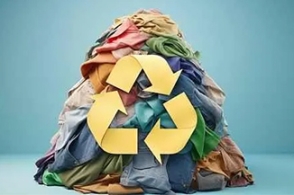
Starting in 2025, Romania—together with the other EU Member States—must implement the separate collection of textile waste as part of a broader effort to reduce the industry’s environmental footprint. This stems from the EU’s Strategy for Sustainable and Circular Textiles, which promotes the reuse and recycling of end‑of‑life textiles, tackles pollution, and reduces resource waste.
The textile industry accounts for a significant share of greenhouse‑gas emissions, as well as excessive water and energy consumption. For instance, producing a single cotton T‑shirt requires roughly 2,700 liters of water. In addition, synthetic textiles such as polyester release plastic microfibers into water during washing, contributing to ocean pollution. These issues have prompted the EU to adopt stricter regulations for the sector.
What the new legislation entails
A key pillar of the new rules is Extended Producer Responsibility (EPR). This requires textile companies to take responsibility for the entire product life cycle, including the management of generated waste. Producers will therefore have to contribute financially to the collection and recycling of used textiles—an incentive to design more durable, repairable, and recyclable products.
Another essential measure is the obligation to separately collect textile waste. This means that across all EU Member States, including Romania, local authorities must provide the necessary infrastructure so citizens can drop off used clothing at dedicated collection points. The collected items will then be sorted: some will be refurbished and reused, others recycled into new materials, and a portion will be used for energy recovery.
Until now, the lack of an efficient collection and management system has led to large volumes of used clothing ending up in landfills or being incinerated. With the new regulations, this is set to change, bringing multiple environmental and economic benefits.
Impact on consumers and industry
For consumers, the new legislation will mean easier access to solutions for recycling old clothes. It will also encourage more responsible purchasing and use of apparel, supporting the shift toward sustainable fashion.
The industry will be directly affected. Beyond new fees and responsibilities, companies will need to rethink product and production models, pivoting toward durable, recyclable materials. This transition can drive innovation in textile design and supply chains, while opening up new markets for reused and remanufactured textile products.
At the same time, moving the textile sector toward a circular economy is expected to create jobs—especially in collection, sorting, recycling, and refurbishment—while reducing dependency on virgin resources such as cotton or petroleum for synthetic fibers.
Romania’s progress on separate textile collection
In Romania, although local and private initiatives for collecting used clothing exist, nationwide infrastructure is still underdeveloped. Even so, the new EU framework obliges Romanian authorities to act swiftly to implement efficient collection systems. Local authorities will need to collaborate with sanitation operators, NGOs, and private companies to build accessible networks of drop‑off points.
How we can help with our clothing collection containers
An essential component of this program’s success is the infrastructure for textile collection and sorting. This is where we come in, with our experience building textile collection containers specifically designed to facilitate separate collection. Our containers—such as the one showcased on the page “Container colectare îmbrăcăminte și haine vechi pentru reciclarea textilelor”—offer a practical, efficient solution for clothing drop‑off, directly supporting the EU’s objectives.
Integrating our containers into the EU textile recycling strategy
Our containers align perfectly with the new EU requirements to develop local capacity for the separate collection of textiles. By deploying these containers in communities, shopping centers, and other public areas, we help achieve recycling and waste‑reduction targets. Their ability to be customized to regional needs makes them ideal for supporting local circular‑economy initiatives.
Another major advantage of these containers is their educational impact. Placed in high‑visibility locations, they raise awareness and encourage both collective and individual responsibility for textile waste management.
Conclusion: Partnering for a sustainable future
The EU’s textile‑recycling initiative is a crucial step toward environmental protection and a more sustainable consumption model. We are ready to support this effort by supplying used‑clothing collection containers and helping build the infrastructure needed for the program’s success.
We encourage local authorities and sanitation operators to partner with us to implement these effective collection solutions, thereby supporting the circular economy and reducing textile waste across Europe. Through joint efforts, we can build a greener, more sustainable future.




Dear Team,\nwe from the Edi trans company,wantto sell our recycling goods. These are original and container goods. They are not sorted. If you are interested, you will need to arrange your own truck and cover the costs for transportation.\n\nIf there are any more quetions just contact us.
Dear Team,\nwe from the Edi trans company,wantto sell our recycling goods. These are original and container goods. They are not sorted. If you are interested, you will need to arrange your own truck and cover the costs for transportation.\n\nIf there are any more quetions just contact us.